The Ocean City Fishing Club opened its first pier and clubhouse in 1916. It is presently the only on-ocean fishing pier in the city and it is one of the most photographed sites in Ocean City. The pier extends 635 feet southeast from the boardwalk.
February 2021, I started a photography project with the goal of photographing some historically significant, weird, or scenic places in New Jersey broken down by county. This blog is my collection of places, all taken on my Canon T5i Rebel with detailed descriptions.
Saturday, December 3, 2022
Wheaton Mansion, Millville (Cumberland County)
The west bank of the Maurice River once was home to the Cargill Granary, a once global supplier of chicken feed. One believed reason why the granary was abandoned was due to the difficult navigation around the river dike; large barges found it challenging to get up the river and to turn around. The area was also known for sand mining for over 50 years. Stone ruins of a late 1700's house can also be found, which was known as the Wheaton Mansion; it was a local favorite for World War II soldiers from the nearby airbase to stop for a hot, homecooked meal. It was inhabited until the 1980's, and seems to have experienced a fire at one point; the remaining wood is charred and brittle.
Historic Smithville Park, Eastampton (Burlington County)
Historic Smithville Park in Eastampton, with its centerpiece circa 1840 Greek Revival Mansion is set in one of the few remaining “intact” Victorian Industrial-era villages in the region. Filled with history and some fascinating, homegrown architecture, Historic Smithville Park has experiences to offer visitors from all walks of life. With access to a beautiful stretch of the Rancocas Creek, Smithville Lake, and hiking trails, this park provides 280 acres of upland forest, wooded wetlands, and historic village for hiking, canoeing, fishing, picnicking, historical tours, wildlife observation, and biking
Saturday, November 19, 2022
The Glen Rock, Glen Rock (Bergen County)
Glen Rock is named for a 570-ton boulder, believed to have been deposited by a glacier, that stands at the northern end of Rock Road, the town's main street. Called Pamackapuka, or Stone from Heaven, by the Delaware Indians, it served as a base for Indian signal fires and later as a trail marker for colonists. In 1921 a bronze plaque was installed on the rock in memory of residents who died in WWI, and it was declared a landmark by the State Office of Historic Sites in 1964.
Lambert Caste, Paterson (Passaic County)
Lambert Castle, originally called Belle Vista, is located within the Garret Mountain Reservation in Paterson. The building was built in 1892 as the home of Catholina Lambert, the owner of a prominent silk mill in the City of Paterson Constructed in the Medieval Revival architectural style, Mr. Lambert's dream was to build a home reminiscent of the castles in Great Britain. President William McKinley and Vice President Garret Hobart visited the castle in 1898. After Lambert's death in 1923, his family sold the building to the City of Paterson, which sold it to Passaic County a few years later
Tear Drop Memorial, Bayonne (Hudson County)
"To the Struggle Against World Terrorism" is a 10-story sculpture by Zurab Tsereteli that was given to the US as a gift from the Russian government in memorial to the 9/11 attacks. It sits right at the end of the Military Ocean Terminal in Bayonne.
The Hermitage, Ho-Ho-Kus (Bergen County)
The Hermitage is a Gothic Revival house built in 1847-48 in Ho-Ho-Kus from designs by architect William H Ranlett. Members of the Ronsencrantz family owned the estate between 1807 to 1970. The site was designated a National Historic Landmark for the excellence of its architecture.
Friday, September 2, 2022
Maurice River Bluffs Preserve, Millville (Cumberland County)
The Maurice River Bluffs Preserve is named for its majestic rounded cliffs overlooking the Maurice River. This 500-acre preserve offers hilly terrain not often found in south Jersey, and it's a crucial stopover habitat for migrating and breeding birds. The preserve also hosts productive freshwater ponds and unique plan community, including New Jersey's largest contiguous wild rice marshes. It also includes six miles of hiking trails.
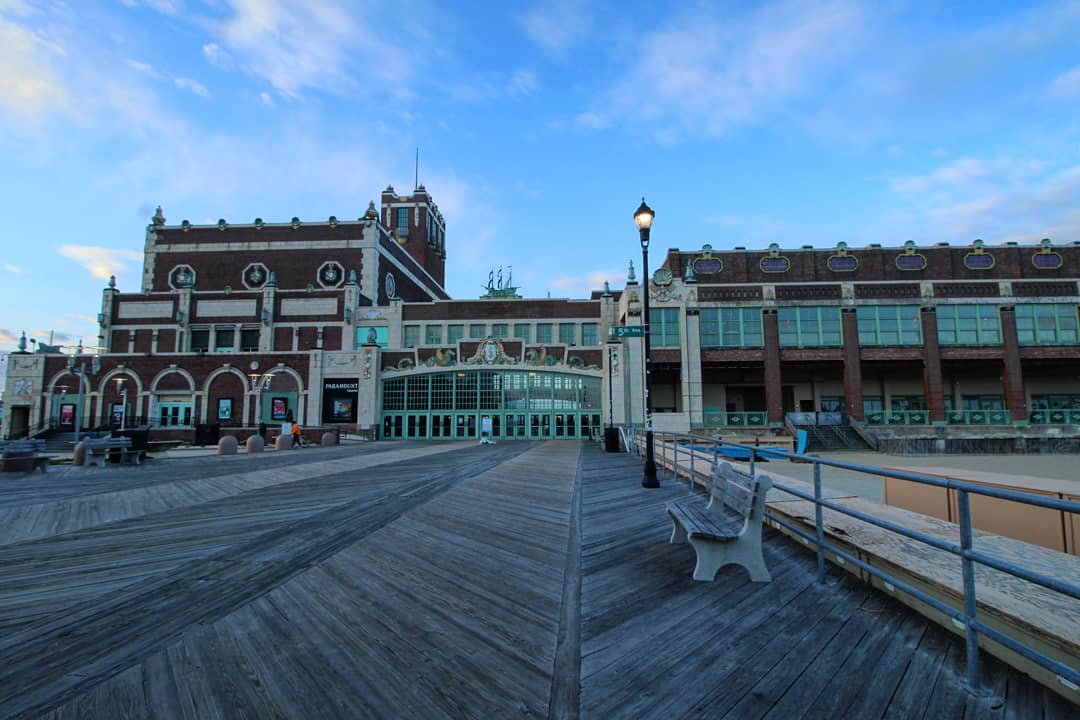
Asbury Park Boardwalk, Asbury Park (Monmouth County)
James A Bradley, New York brush manufacturer, founded Asbury Park in 1871. Shortly after, a beach boardwalk was constructed featuring an orchestra pavilion, public changing rooms, and a pier extending into the Atlantic Ocean. This attracted entrepreneurs, entertainers, and tourists from all over. As Asbury Park's popularity increased, the size and offerings of the boardwalk expanded; in the 1920's, the Paramount Theater and Convention Hall ushered in a new era of music and performing arts.
Colgate Clock, Jersey City (Hudson County)
The Colgate Clock is large clock facing the Hudson River in Jersey City. It was once perched at the top of the Colgate Plant in Jersey City, and was built in 1926.
Island Beach State Park, Berkeley Township (Ocean County)
Island beach State Park has been shaped by storms and tides; it's a narrow barier island stretching 10 miles between the Atlantic Ocean and Barnegat Bay. Miles of sand dunes and white sandy beaches offer habitat to maritime plans and diverse wildlife that is almost the same as it was thousands of years ago. Island Beach State Park contains outstanding examples of plant communities such as primary dunes, thicket, freshwater wetlands, maritime forest and tidal marshes. The state's largest osprey colony, as well as peregrine falcons, wading birds, shorebirds, waterfowl, and migrating songbirds are found here. Island Beach is nationally known as a unique resource with over 400 plants identified, including the largest expanse of beach heather in New Jersey.
Prallsville Mills, Stockton (Hunterdon County)
The Prallsville Mills are significant as a representation of an early 19th to early 20th century village industrial complex that has not been affected by the late 20th century suburban growth. The building structures date back to circa 1790. John Prall, Jr., a local businessman and veteran of the American Revolution, turned the small gristmill operation into an industrial complex that included the milling of linseed oil and lumber. After his death in 1831, the mills and surrounding land were sold to William Hoppock and John Wilson and significant advances in transportation took place under their ownership. Two most important improvements, a canal and a railroad, crossed this site and served the industry's commerce needs. Hoppock and Eilson executed a deed with the Delaware and Raritan Canal Company in the 1830's to locate the canal on the property. and in the 1850's the Belvidere and Delaware Railroad, ran alongside the canal. It ceased operations in 1969
Subscribe to:
Posts (Atom)